ENG
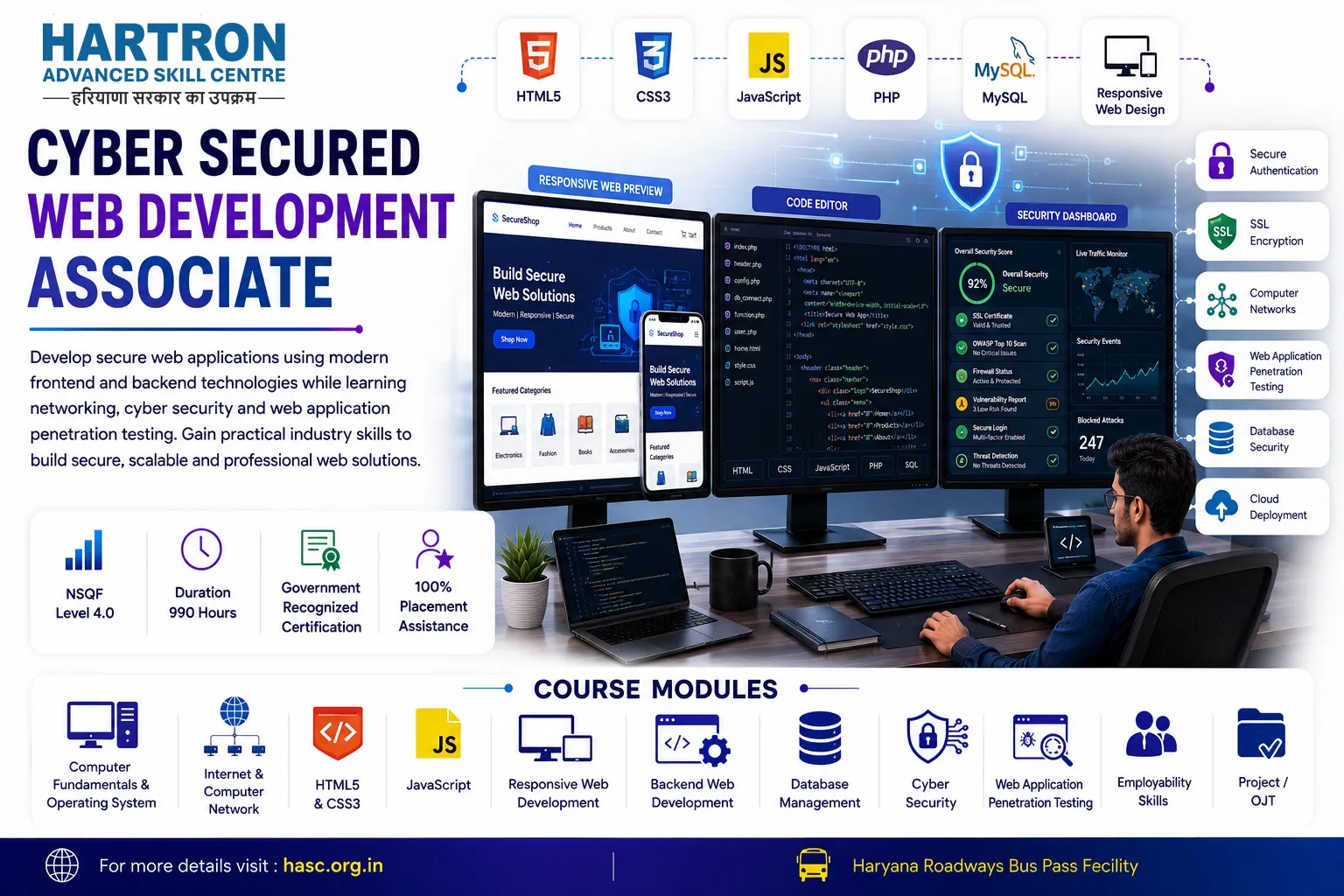
ENG  NSQF Level: 4.0
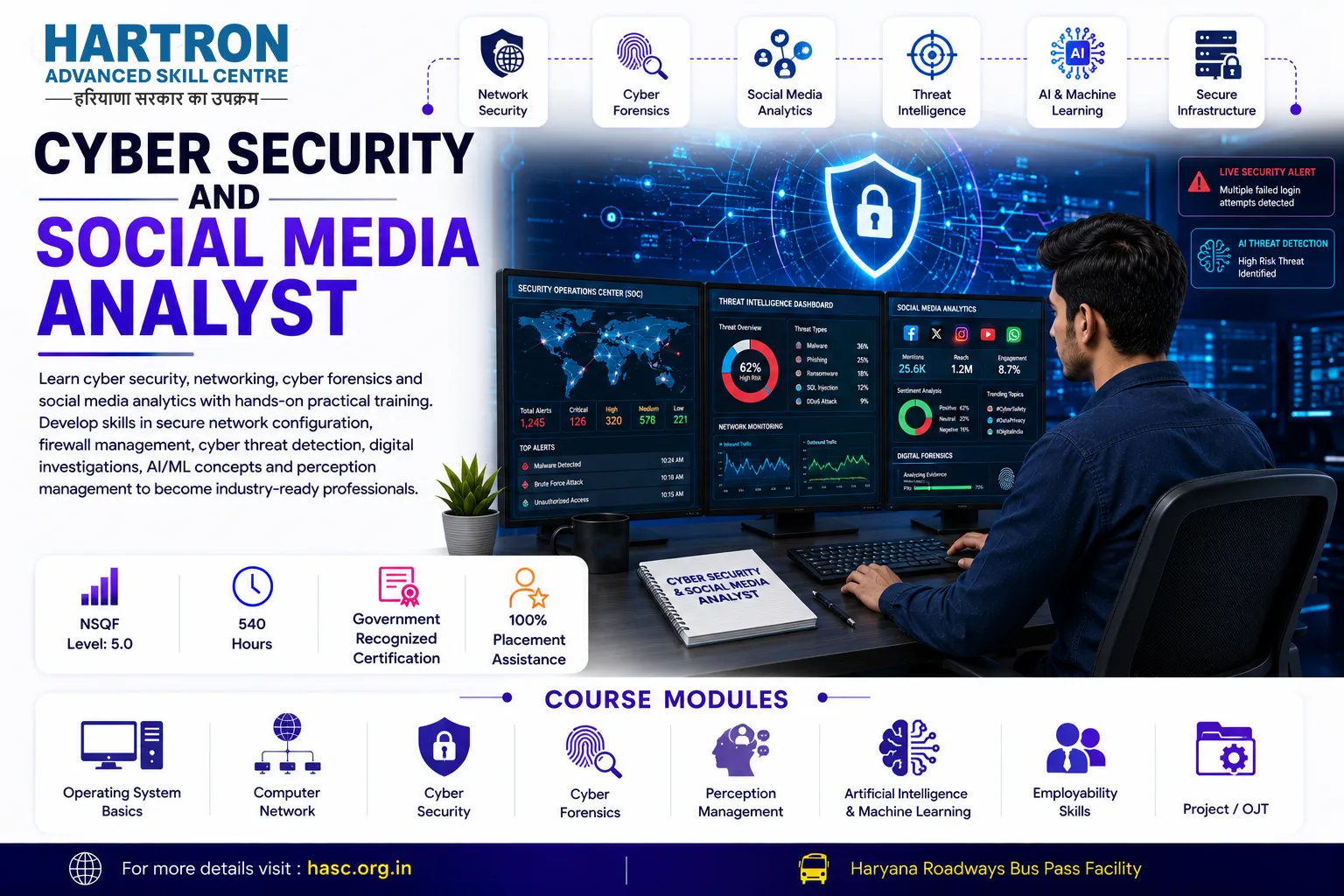
 450 Hours
 32 students enrolled
Overview
Junior Cyber Security Associate Course
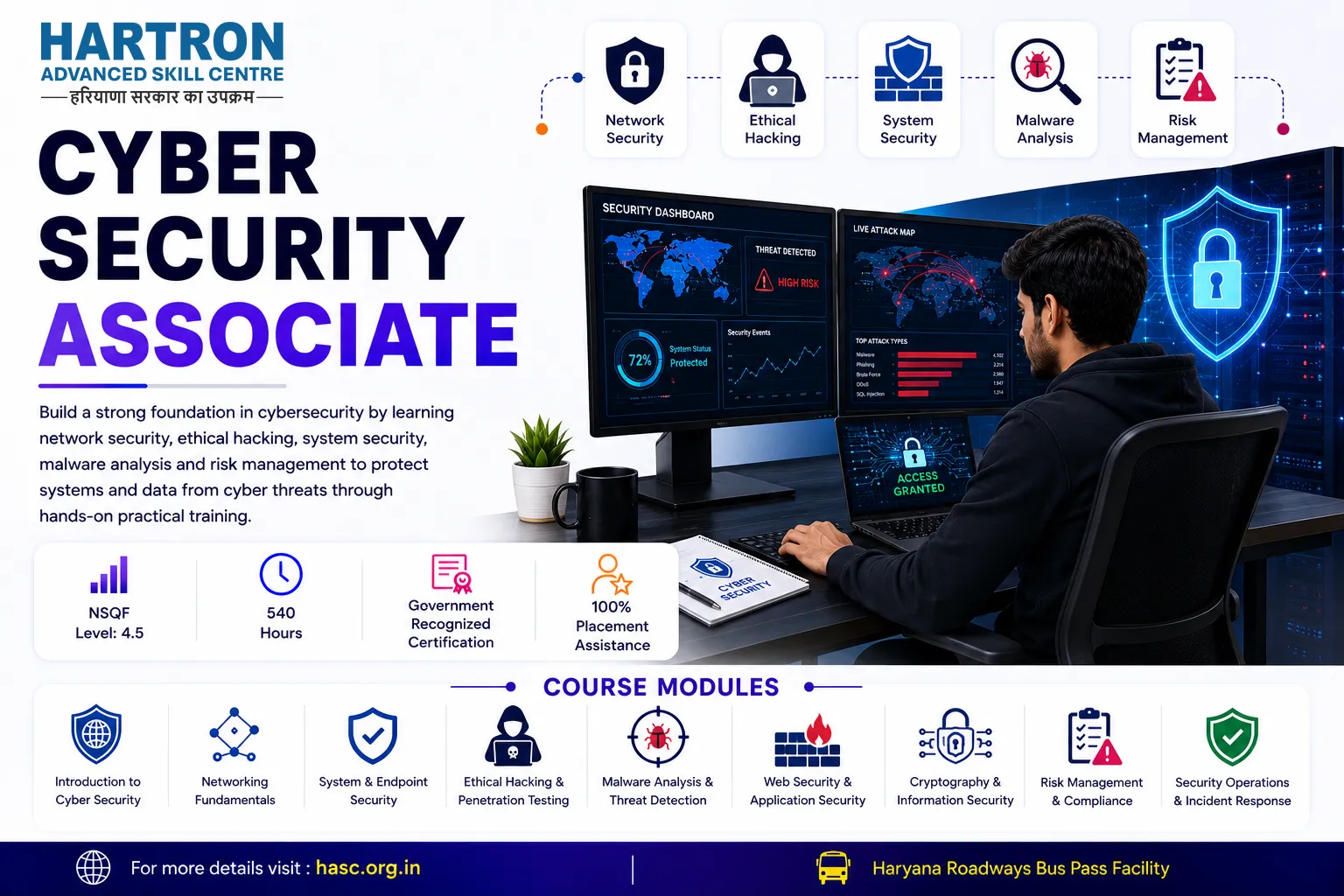
Junior Cyber Security Associate is a job-oriented skill development course designed to build strong foundations in Cyber Security, Network Security, Ethical Hacking, Cryptography, Infrastructure Security and Cyber Threat Management.
The course covers network fundamentals, operating systems, cyber security concepts, firewalls, IDS/IPS, authentication mechanisms, ethical hacking methodologies, penetration testing and network monitoring.
Students gain practical exposure through hands-on labs, projects and real-world cyber security scenarios that prepare them for entry-level cyber security roles.
Upon successful completion, candidates will be equipped with job-ready cyber security skills required for entry-level positions in Cyber Security Operations, Network Security, Information Security and Security Monitoring domains.
What You Will Learn
- Network Fundamentals
- Operating Systems
- Cyber Security Concepts
- Firewalls & IDS/IPS
- Access Control
- Cryptography
- Ethical Hacking
- Penetration Testing
- Network Monitoring
- Infrastructure Security
- Incident Response
- Cyber Threat Mitigation
Career Opportunities
After successful completion of the course, candidates can explore opportunities such as:
- Junior Cyber Security Associate
- Cyber Security Technician
- SOC Analyst Trainee
- Network Security Associate
- Information Security Assistant
- Cyber Security Support Executive
- Security Operations Associate
- IT Security Assistant
- Cyber Defense Associate
- Infrastructure Security Technician
Why Choose This Course?
- Industry-Oriented Curriculum
- Hands-On Practical Training
- Government Recognized Certification
- Experienced Trainers
- Career Guidance
- Interview Preparation Support
- Job Readiness Training
- Future-Focused Technology Skills
- Growing Career Opportunities in Cyber Security Domain
Course Content
-
 Basic networking concepts including IP addressing, routing, and protocols.
 -
Principles of operating systems – file management, system processes, user interfaces
-
Network devices – routers, switches, firewalls and their interactions
-
Network settings configuration and troubleshooting
-
Operating system management, updates and system security
-
Cybersecurity concepts – threats, vulnerabilities, and protocols
-
Data protection – encryption, access control, secure storage
-
Role of security tools – firewalls, IDS/IPS, antivirus
-
User authentication and access control
-
Cyber threat identification and mitigation
-
Cryptographic algorithms and applications
-
Symmetric and asymmetric encryption technique
-
Ethical hacking methodolo gies and tools
-
Penetration testing and system vulnerability assessment
-
Public Key Infrastructure and digital certificates
-
Network security concepts – firewalls, IDS/IPS
-
Configuring network security devices
-
Secure network architecture and communication protocols
-
Mitigating common network attacks
-
Network monitoring and traffic analysis
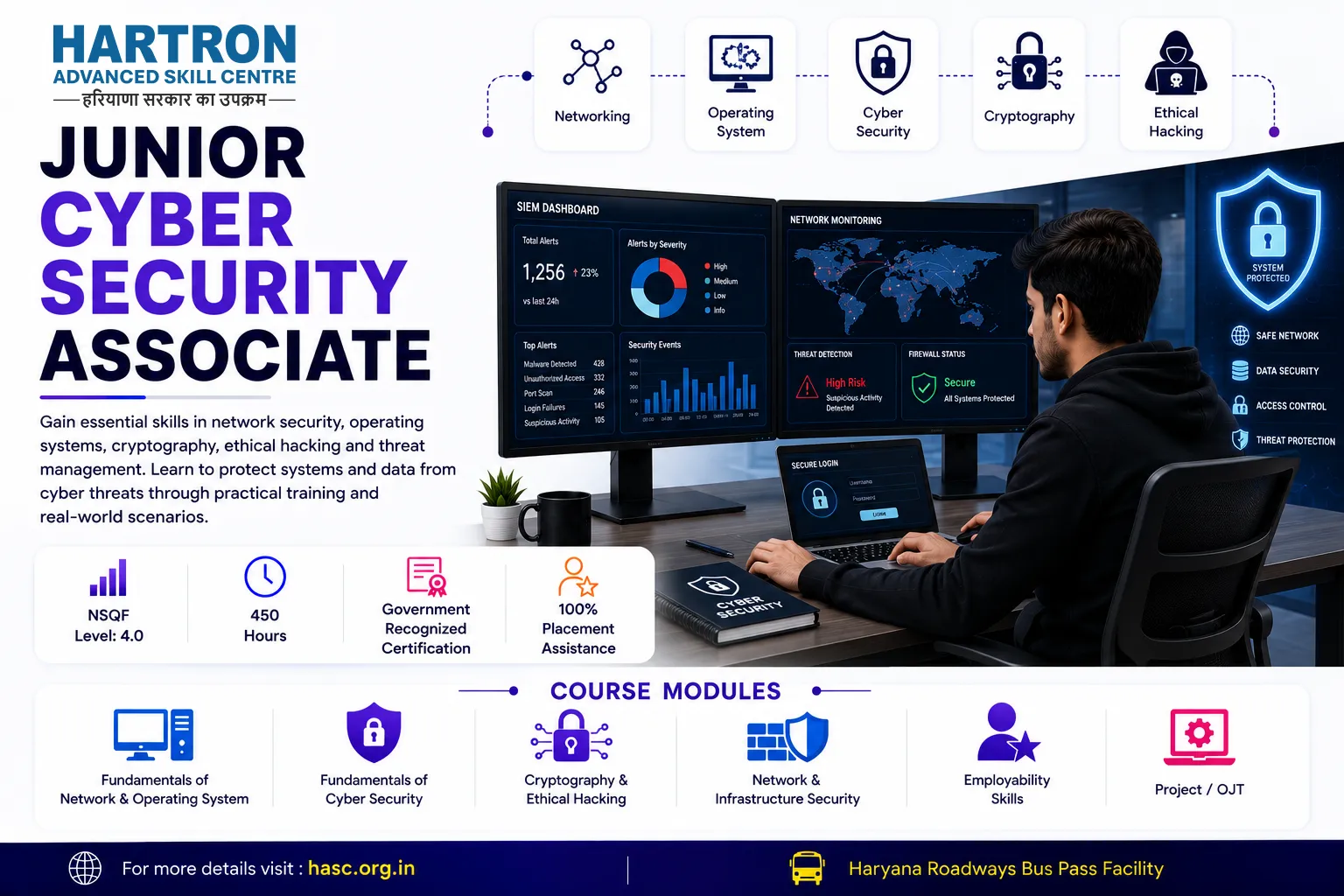
 NSQF Level: 4.0
 Duration: 450 Hours
 Government Recognized Certificate
 Certificate of Completion
 12th grade pass