ENG
ENG  NSQF Level: 5.0
 540 Hours
 32 students enrolled
Overview
Cyber Security and Social Media Analyst
Cyber Security and Social Media Analyst Associate is an advanced job-oriented skill development programme designed to prepare learners for careers in Secure Web Development, Cyber Security and Network Administration. The course combines Web Development, Networking, Linux Administration and Ethical Hacking to help students build secure, scalable and industry-ready web applications.
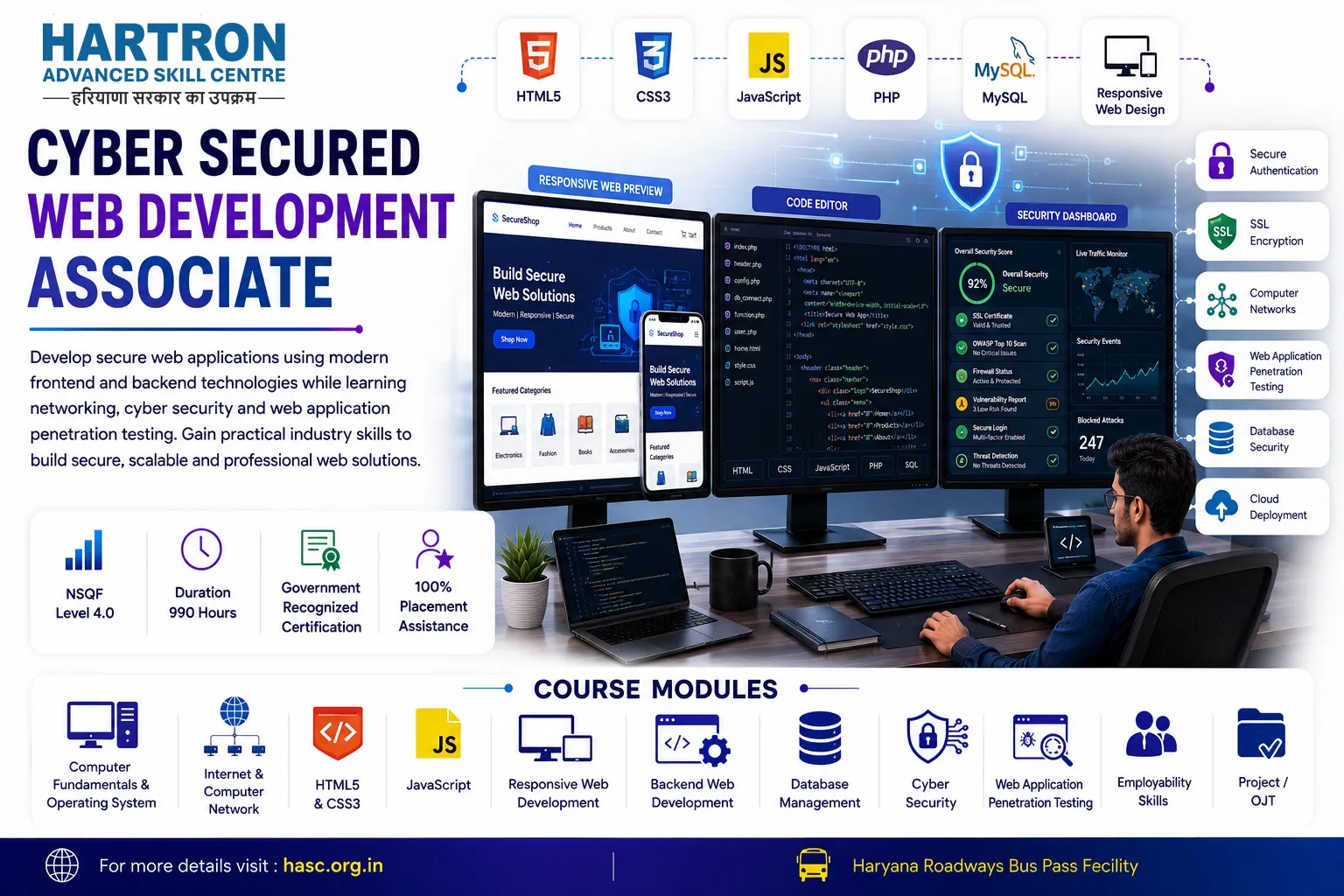
Students learn Front-End and Back-End Web Development using HTML5, CSS, JavaScript, Bootstrap, PHP and MySQL while also gaining practical knowledge of Computer Networks, Linux, Routing, Switching, Firewalls, VPNs and Server Administration.
The course further covers Cyber Security, Cryptography, Ethical Hacking, Vulnerability Assessment, OWASP Top 10, Secure Coding Practices and Web Application Penetration Testing. Hands-on labs, practical assignments, Employability Skills and On-the-Job Training (OJT) prepare students for real-world industry requirements.
What You Will Learn
- Computer Fundamentals & Operating Systems
- Linux Administration & Shell Scripting
- Internet & Computer Networking
- Routing, Switching, VLAN & VPN Configuration
- TCP/IP & Network Troubleshooting
- HTML5, CSS3 & JavaScript
- Bootstrap Framework
- PHP Programming
- MySQL Database Development
- Secure Website Development
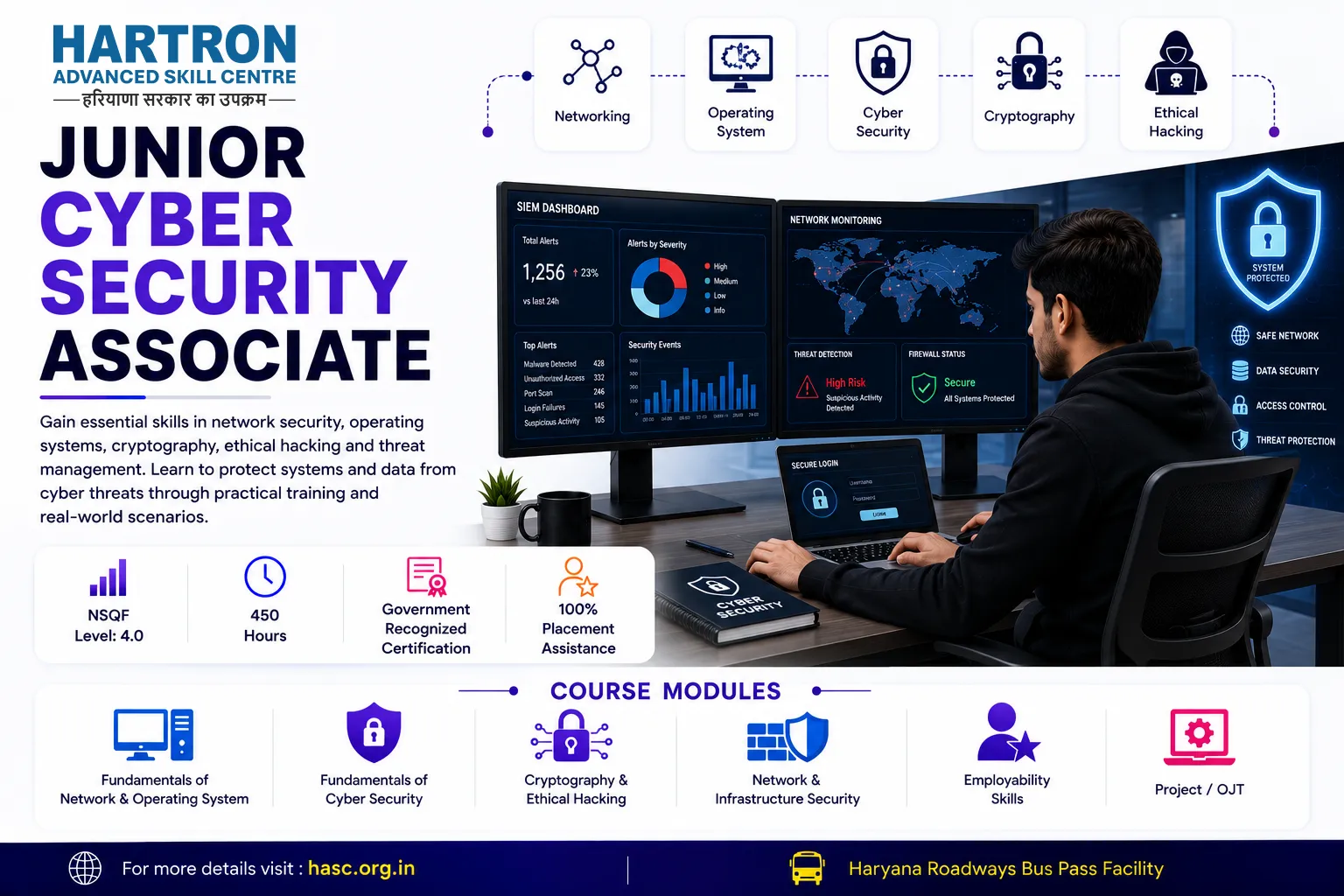
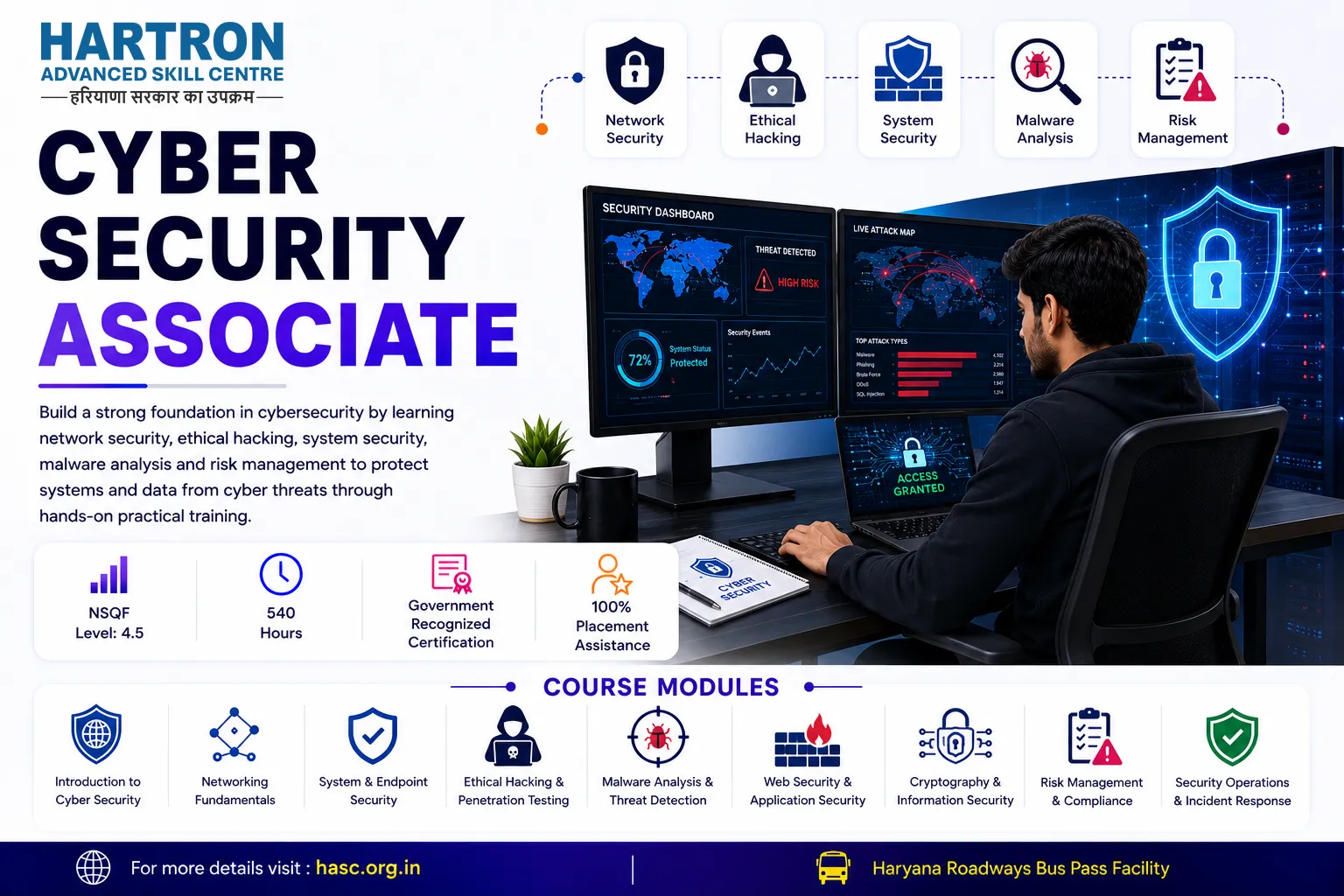
- Cyber Security Fundamentals
- Cryptography
- Vulnerability Assessment
- Web Application Penetration Testing
- OWASP Top 10
- Secure Coding Practices
- Cloud & Server Security
- API Security Testing
- Project Work & OJT
Career Opportunities
After successful completion of the course, candidates can explore opportunities such as:
- Secure Web Developer
- Cyber Security Associate
- Web Application Security Analyst
- PHP Web Developer
- Front-End Developer
- Back-End Developer
- Full Stack Web Developer (Entry Level)
- Network Support Engineer
- Linux System Administrator
- SOC Analyst Trainee
- Information Security Assistant
- Penetration Testing Associate
- Web Security Tester
- Technical Support Engineer
- IT Infrastructure Support Executive
Why Choose This Course?
- 990 Hours Comprehensive Training
- Industry-Oriented Curriculum
- Complete Web Development Training
- Hands-on Linux & Networking Labs
- Cyber Security Modules
- Web Application Penetration Testing
- Secure Coding Practices
- Live Projects & Practical Assignments
- Employability Skills Training
- On-the-Job Training (OJT)
Course Content
-
 Computer Fundamentals, Hardware / Software, Applications
 -
Basics of Operating system, OS Installation (Window & Linux), Basics of Windows operating system, various types of Linux installation (Red Hat, Centos, Ubuntu), Booting process
-
Basic Linux Command, vi, vim, Nano text editor
-
Advance Linux Commands
-
Shell Scripting
-
Basics of Internet, usages & its applications
-
Introduction to LAN, MAN, PAN, WAN, WLAN Ethernet Fundamentals and Cabling, ISO- OSI Reference Model, TCP/IP Model,
-
IP address, Classes, Classless, CIDR, Prefix, IPv6 addressing
-
TCP/IP Troubleshooting utilities like hostname, ipconfig/ ipconfig, Arp, Ping, tracert/trace route, Path ping, route, netstat, getmac, nslookup.
-
Router and switch Hardware, enable telnet and SSH access on Router
-
Basics of routing and switching, routing classification, Static Routing, Default routing, Dynamic routing
-
Types of Switches, installation, configuration, MAC binding
-
NAT Concept, static NAT, Dynamic NAT configuration and troubleshooting
-
Gateway load balancing
-
Switching process, VLAN concept, VLAN trunking protocol IEEE802.1Q, VTP
-
Configuring services -Telnet, SSH, NFS, FTP, Web, DHCP, DNS etc.
-
Access control Lists, standard ACL, Extended ACL, Named ACL
-
Virtual Private Networks (VPNs), Concepts, Site-to-site VPN configuration, Easy VPN Server Concept.
-
Front End Development
• Introduction to Web Design
• Text Editors and their installation
• HTML-5 Basics and its uses
• Cascading Style Sheets (CSS)
• JavaScript
• Bootstrap- 4 and advance -
Data base Concepts
• Introduction to Data base, types and comparative study
• Introduction to My SQL Work bench,
• My SQL data base
• Table & Views, My SQL Queries, clauses, conditions, joins
• Aggregate functions, My SQL functions (built in /custom) -
Back End Development
• Introduction to the Website Development
• Implementation of a server-side programming language PHP and website security
• Database connectivity with PHP and My SQL
-
Ethical hacking (Cyber Security) & Counter Measures
• Basics of Cyber Security
• Cryptography
• Introduction to Ethical Hacking
• Foot printing and Reconnaissance
• Scanning Networks
• Enumeration
• Vulnerability Analysis
• System Hacking
• Malware Threats
• Sniffing
• Social Engineering
• Denial-of-Service
• Session Hijacking
• Evading IDS, Firewalls, and Honey pots
• Hacking Wireless Networks
• Hacking Mobile Platforms
• IoT and OT Hacking
• Cloud Computing & its Security
• securing DNS server
• securing Web server
• Securing DB server
• Linux based Firewall, IP tables, ACLs, etc -
Web App Penetration
• Hacking Web Servers & Applications
• Web Application Testing Frameworks
• OWASP top 10
• Secure Coding Practices
• Web Application API Testing
• Best Practices for Protecting Web Applications
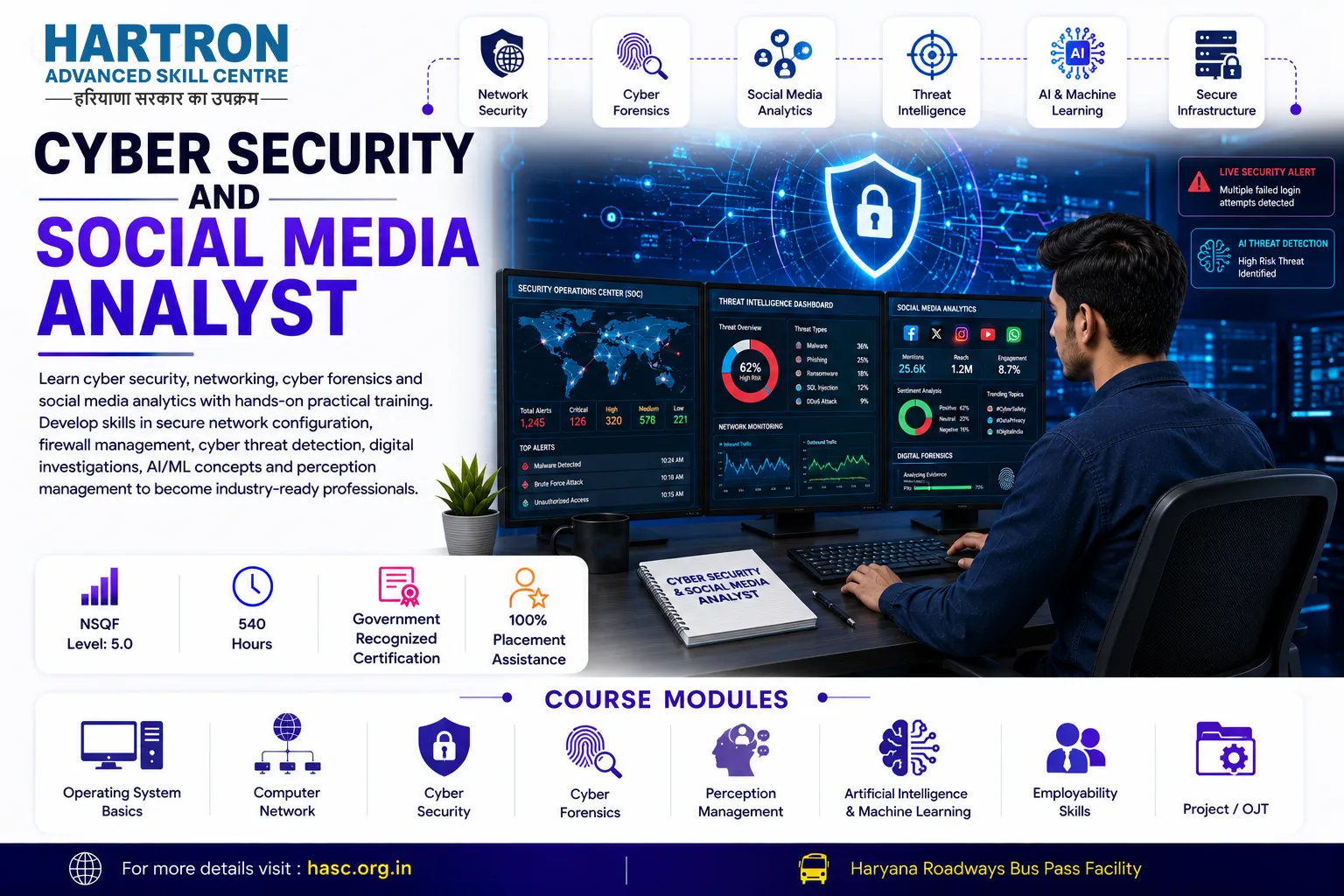
 NSQF Level: 5.0
 Duration: 540 Hours
 Government Recognized Certificate
 Certificate of Completion
 12th grade pass