ENG
ENG  NSQF Level: 4.0
 990 Hours
 32 students enrolled
Overview
Cyber Secured Web Development Associate
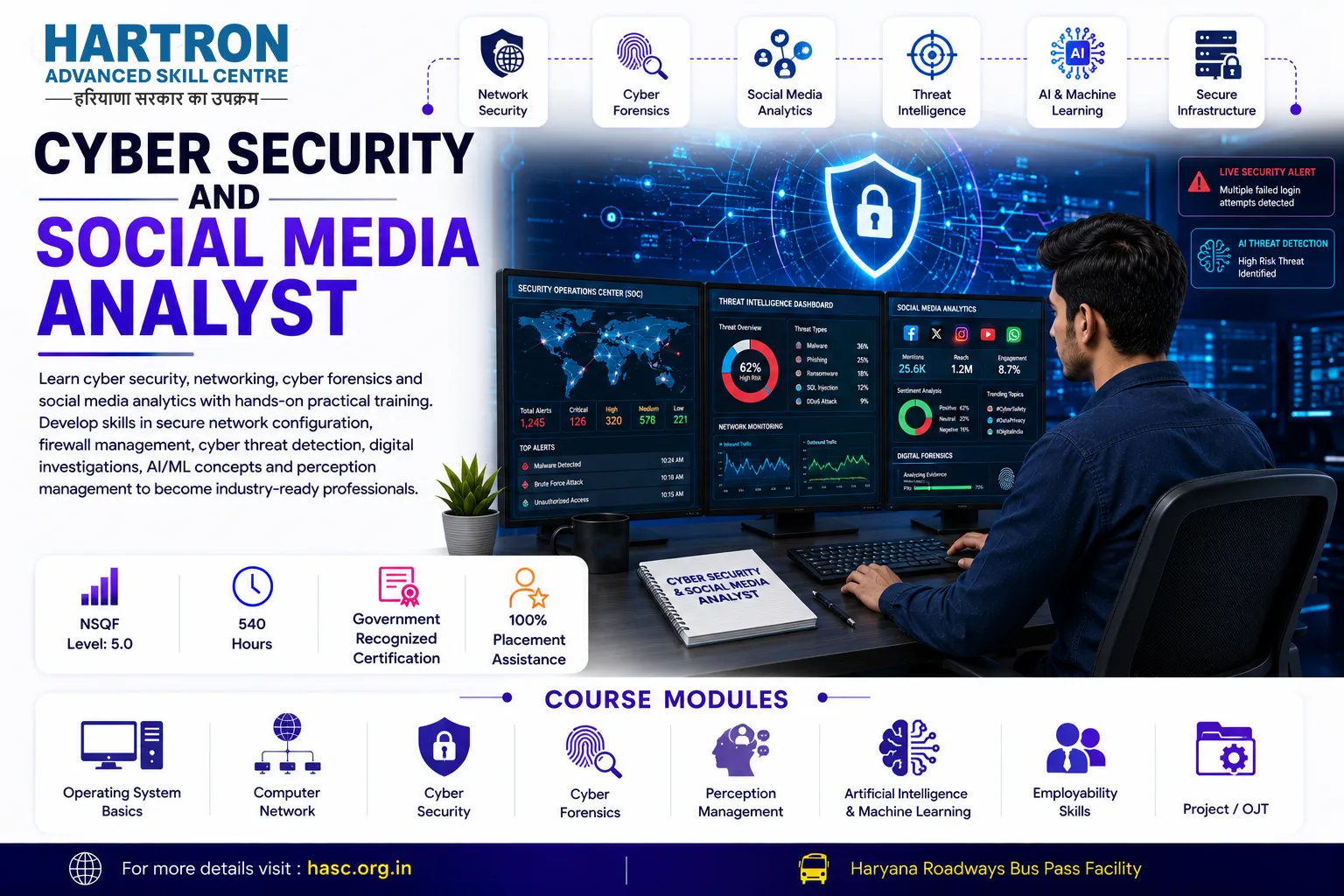
Cyber Secured Web Development Associate is an advanced Government-recognized skill development programme designed to prepare students for careers in Cyber Security, Information Security, Network Administration, Digital Forensics and Social Media Analytics.
The course provides practical training in Operating Systems, Linux, Windows Server Administration, Computer Networking, Routing, Switching, VPN, Firewalls, Cyber Security, Ethical Hacking, Digital Investigation, Social Media Intelligence and Artificial Intelligence.
Students gain hands-on experience through lab sessions, live projects, practical assignments, employability skills and On-the-Job Training, making them industry-ready for Government as well as Private Sector jobs.
What You Will Learn
- Operating Systems (Windows & Linux)
- Computer Networking
- TCP/IP
- IPv4 & IPv6
- Routing & Switching
- VLAN & VPN
- Firewall Configuration
- Linux Administration
- Windows Server Administration
- Network Security
- Cyber Security
- Cryptography
- Ethical Hacking
- Digital Forensics
- Cyber Law
- Social Media Analytics
- Social Media Monitoring
- Sentiment Analysis
- Perception Management
- Psychological Warfare
- Artificial Intelligence
- Machine Learning
- Cloud Computing
Career Opportunities
After successful completion of the course, candidates can explore opportunities such as:
- Cyber Security Analyst
- SOC Analyst
- Network Security Engineer
- Cyber Forensics Associate
- Information Security Executive
- Cyber Crime Investigation Assistant
- Digital Forensics Analyst
- Social Media Analyst
- Threat Intelligence Analyst
- Linux Administrator
- Windows Server Administrator
- Network Administrator
- Security Operations Associate
- Cyber Security Consultant
- IT Security Executive
Why Choose This Course?
- 540 Hours Comprehensive Training
- Government Recognized Certificate
- Industry-Oriented Curriculum
- Advanced Networking Labs
- Cyber Security Practical Sessions
- Digital Forensics Training
- Social Media Analytics
- AI & Machine Learning Basics
- Live Projects
- Experienced Trainers
- Employability Skills
- On-the-Job Training
- Placement Assistance
Course Content
-
 Introduction to different types OS, their Installations, Booting process
 -
Learn to use basic command for Linux and windows OS.
-
Learn to configure basic services Web, DHCP, DNS, Telnet, SSH TFTP
-
Network basics: Ethernet Fundamentals and Cabling, ISO-OSI Reference Model, TCP/IP Model, Introduction to LAN, MAN, PAN, WAN, WLAN
-
IP address, Classes, Classless, CIDR, Prefix, FLSM VLSM, IPv6 addressing
-
Network Device OS CLI command, Booting process of router, Router and switch Hardware, enable telnet and SSH access on Router , CDP, LLDP
-
Basics of routing and switching, routing classification, Static Routing, Default routing, Dynamic routing RIP, RIP Version2
-
Types of Switches, installation, configuration, MAC binding, port security on cisco switch, Layer2 security problems and solutions.
-
Advanced routing protocols EIGRP, OSPF, EIGRP for IPv6 and OSPFv3, theory and configuration and troubleshooting.
-
Access control Lists, standard ACL, Extended ACL, Named ACL
-
NAT Concept, RFC1918 Addresses, static NAT, Dynamic NAT, PAT configuration and trouble shooting
-
Gateway load balancing protocols HSRP, GLBP, VRRP
-
Switching process, LAN VLAN, DTP, VLAN trunking protocol IEEE802.1Q, VTP, STP
-
WAN protocols HDLC, PPP, frame relay concepts and configuration
-
Implement port security on cisco switch, Layer2 security problems and solutions.
-
Logging server, SNMP, Bandwidth Management
-
Virtual Private Networks (VPNs), Concepts, Sitetosite VPN configuration, Easy VPN Server. Concept.
-
NTP Server, time synchronization on network configuration
-
Information Security: why Information security needed, setup information security in network.
-
Setting up DB Server, Setting up Proxy server
-
Linux based Firewall, IPtables, ACLs, etc
-
Cryptography (Symmetric, Asymmetric)
-
Information gathering, sniffing, scanning
-
ARP Cache Poisoning and MITM Attack, IP spoofing, MAC spoofing
-
DOS & DDOS attack
-
Accessing remote machine, Privilege Escalation
-
Cyber Law & Digital Forensics
-
Mobile Forensics
-
Social media Analysis and Perception Management
-
Social Media Publications
-
Social media Analysis and Perception Management
-
Gathering Social Media data
-
Social Media Metrics
-
Analysing Social Media Data
-
Sentiment Analysis
-
Social media Analysis and Perception Management
-
Social Network Analysis
-
Challenges in Social Media Analytics
-
Content Development and Social Media
-
Psychological Warfare
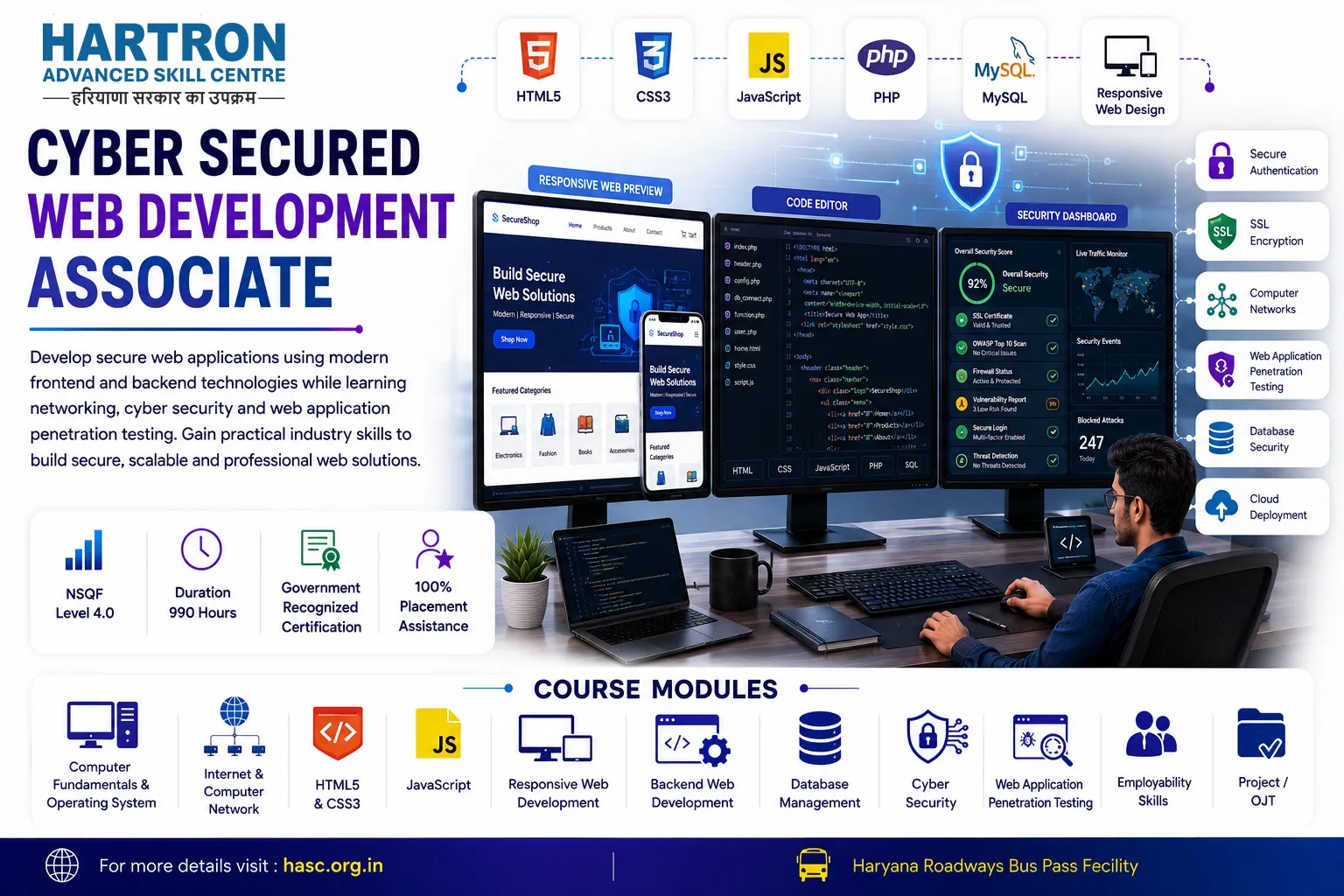
 NSQF Level: 4.0
 Duration: 990 Hours
 Government Recognized Certificate
 Certificate of Completion
 12th grade pass